Written by: Jenna Milazzo, AMFT
Especially around Thanksgiving, when gratitude takes center stage, there can be a pressure to feel thankful, even when life feels anything but joyful. In our efforts to focus on the good, we can unintentionally dismiss the other aspects of life that need our attention.
Think about baking your favorite holiday dessert. Imagine deciding to skip an ingredient because it seems insignificant. A pinch of salt? A teaspoon of baking soda? Anyone who's spent time baking knows that even the smallest ingredients can play an essential role.
I love making oatmeal cookies. Every ingredient has a purpose. Leave out the baking soda, for example, and the cookies won't rise properly. They'll be denser, flatter, and have a different texture. Each ingredient contributes something important to the finished product.
The recipe for wholehearted living also calls for all of our self. Putting aside certain aspects has consequences.
Especially at the holidays, we want joy, peace, and gratitude; we'd rather leave out grief, disappointment, and sadness.
1. When Gratitude Becomes Avoidance
Gratitude is associated with greater emotional well-being, stronger relationships, and increased resilience. But there's an important difference between practicing gratitude and using it to avoid difficult emotions.
You may have heard phrases like, "Just focus on the positive," "At least you have something to be thankful for," or "Everything happens for a reason."
While often well-intentioned, these statements can reflect toxic positivity: the pressure to maintain a positive outlook while minimizing or dismissing pain.
Toxic positivity can be a way our minds protect us from emotional pain. While this may offer temporary relief, repeatedly avoiding uncomfortable emotions can prevent us from fully processing our experiences. Often, the emotions we'd rather skip are the very ones inviting us to slow down, pay attention, and heal more deeply.
What if gratitude isn't the opposite of grief, but its companion?
What if making room for our sorrow doesn't diminish our thankfulness, but allows us to experience it more deeply?
When we repeatedly push aside uncomfortable experiences, we lose opportunities to understand what we're feeling and what we need. While focusing on the good may offer temporary relief, avoiding difficult emotions can keep us from fully processing our experiences.
Healthy gratitude makes room for emotional honesty. It allows us to recognize what's good without dismissing what's difficult.
Instead of telling ourselves, "I shouldn't feel sad because I have so much to be thankful for," we might acknowledge, "I'm grateful for what I have, and I'm also grieving what I've lost."
Gratitude doesn't require us to deny our reality.
2. Holding Both Joy and Grief
The holidays have a unique way of bringing joy and sorrow to the surface. A familiar tradition may bring comfort while reminding us of someone who's missing. A gathering with loved ones may stir feelings of connection alongside disappointment, loneliness, or unresolved tension.
An important aspect of emotional health is developing the capacity to recognize and hold multiple emotions at once.
Psychologist Carl Jung wrote, "Wholeness is not achieved by cutting off a portion of one’s being, but by integration of the contraries."
This process of emotional integration involves acknowledging all of our experiences rather than dividing them into feelings we should embrace and feelings we should avoid.
We can celebrate someone else's joy while carrying our own longing. We can appreciate the goodness in our lives while acknowledging what's missing. We can feel hopeful about the future while grieving what has changed.
These experiences aren't contradictions. They're part of being human.
This doesn't mean we need to dwell indefinitely on painful emotions or wait until we've finished grieving before experiencing joy. Rather, we can allow ourselves to experience the full range of our emotions without feeling that one cancels out another.
3. Making Room for Our Whole Selves Before God
For Christians, gratitude can sometimes feel like a spiritual obligation, especially during seasons when life is difficult. We may feel pressure to focus on God's goodness while setting aside our disappointment, anger, or grief.
Yet Scripture offers a more spacious picture of our relationship with God.
The Psalms are filled with expressions of joy and thanksgiving, but also sorrow, confusion, anger, and questions that don't have easy answers. In Psalm 13, David asks, "How long, O Lord?" His words remind us that faith doesn't always sound like praise. Sometimes it sounds like longing, protest, or simply wondering where God is in the midst of our pain.
There is room for these experiences in our relationship with God.
We don't have to resolve our grief before expressing gratitude, nor do we have to manufacture gratitude when we're hurting. When we struggle to pray, trust, or even sense God's presence, that struggle doesn't place us outside His care.
Perhaps spiritual growth involves discovering, again and again, that we are welcomed as we are, not only when we're grateful and hopeful, but also when we're weary, disappointed, or unsure.
We can bring our whole selves into relationship with God, trusting that His love is spacious enough to hold all that we carry.
An Invitation To The Table
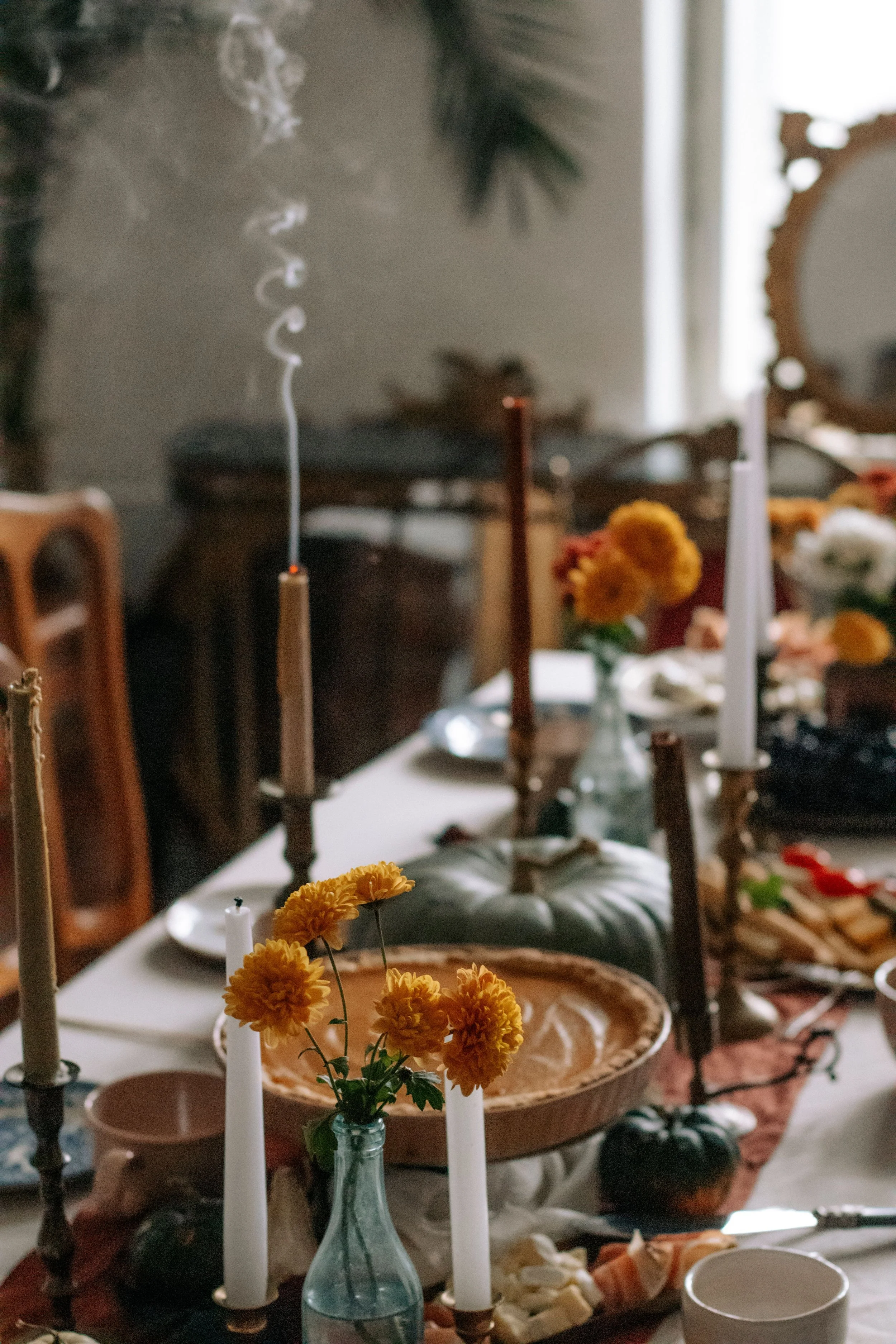
As Thanksgiving approaches, the invitation isn't to leave our grief behind to make room for gratitude, but to recognize that both have a place at the table.
Whether you find yourself surrounded by family and friends or longing for a place to belong, may you know that you are seen, known, and welcomed fully. This table, rich with compassion, has room for your joy and your sorrow, your gratitude and your grief. It is a place where you don't have to pretend everything is okay to be welcomed.
And as you receive that kind of welcome, may you extend it generously to those around you, making room for their stories, struggles, and joys.
This Thanksgiving, may we practice a gratitude that doesn't require us to leave our grief at the door. There is room for both at the table.